Turning an AI black box into a thought partner: drop-off from 70% to 20%
- AI product design
- Role: lead product designer
- Team: ML engineer, policy consultant, product manager
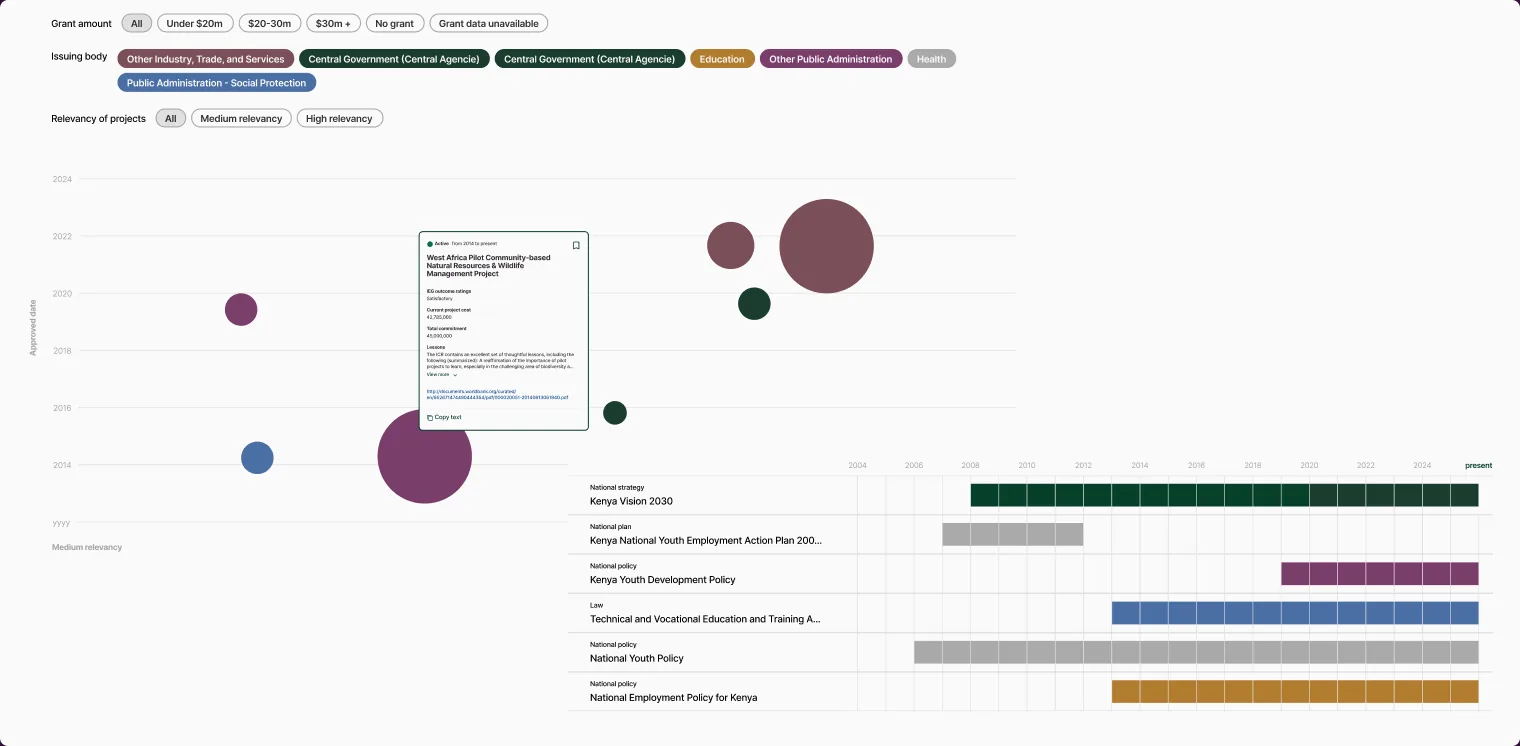
PolicyCopilot is a tool used by policy-makers to diagnose policy problems. The tool included an AI chat that helped users retrieve evidence from a curated knowledge base.
Summary
- Context
- 70% of usability testing participants dropped off our AI chatbot because they didn't trust the sources it selected, even though its citations matched the academic papers they trust.
- Approach
- Showed that a disclaimer about source vetting didn't help, then redesigned the chatbot into a guided flow where users define the problem and root causes that drive which evidence is selected.
- Outcome
- Drop-off fell from 70% to 20%. Shipped on time for the funder demo that secured $1M.
Our AI chatbot offered the same citation information as academic papers that users trust
Users told us in-text citations and a full reference list are what make research credible...
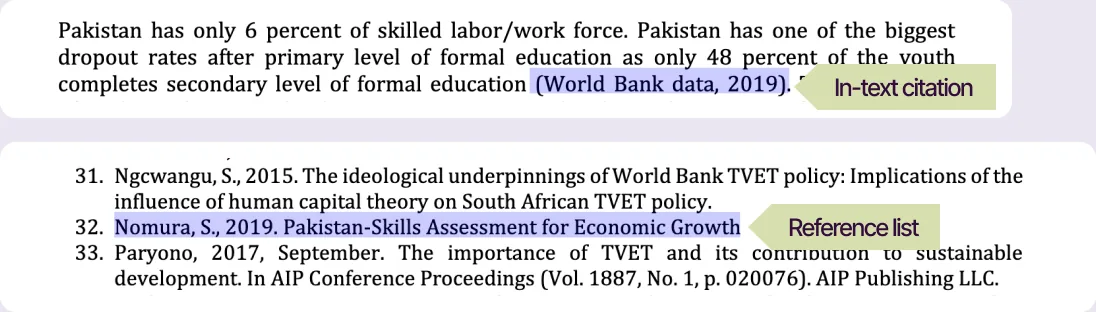
... our chatbot already gave them both in the same format so the lack of trust sat somewhere else
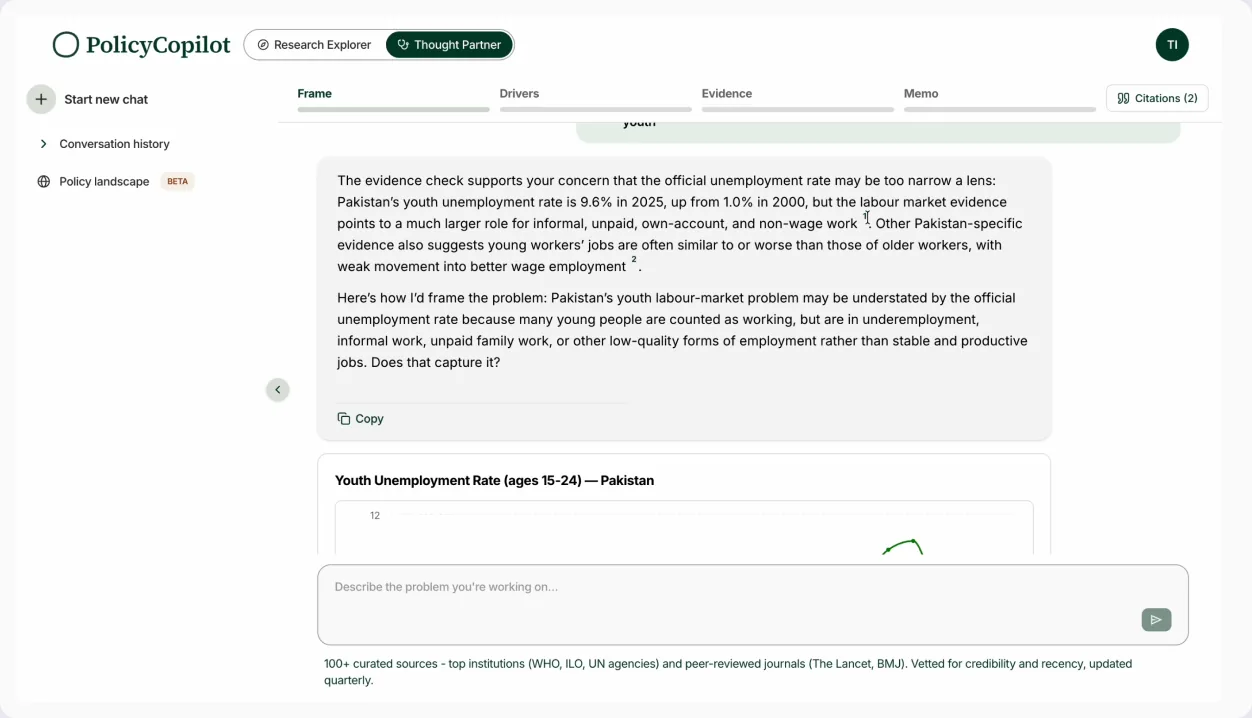
but 7/10 of usability testing participants mentioned “not trusting the selected sources” in our AI chatbot, leading to high drop offs
Users asked us to explain how sources were vetted so I added a disclaimer.
Drop-off did not move

After a week live, drop-off went from 70% to 65% across 42 sessions (no meaningful change)
I needed to make structural changes to the product. To start, I explored what levers cultivated trust
I mapped how people decide to trust in general, then how policymakers do specifically.
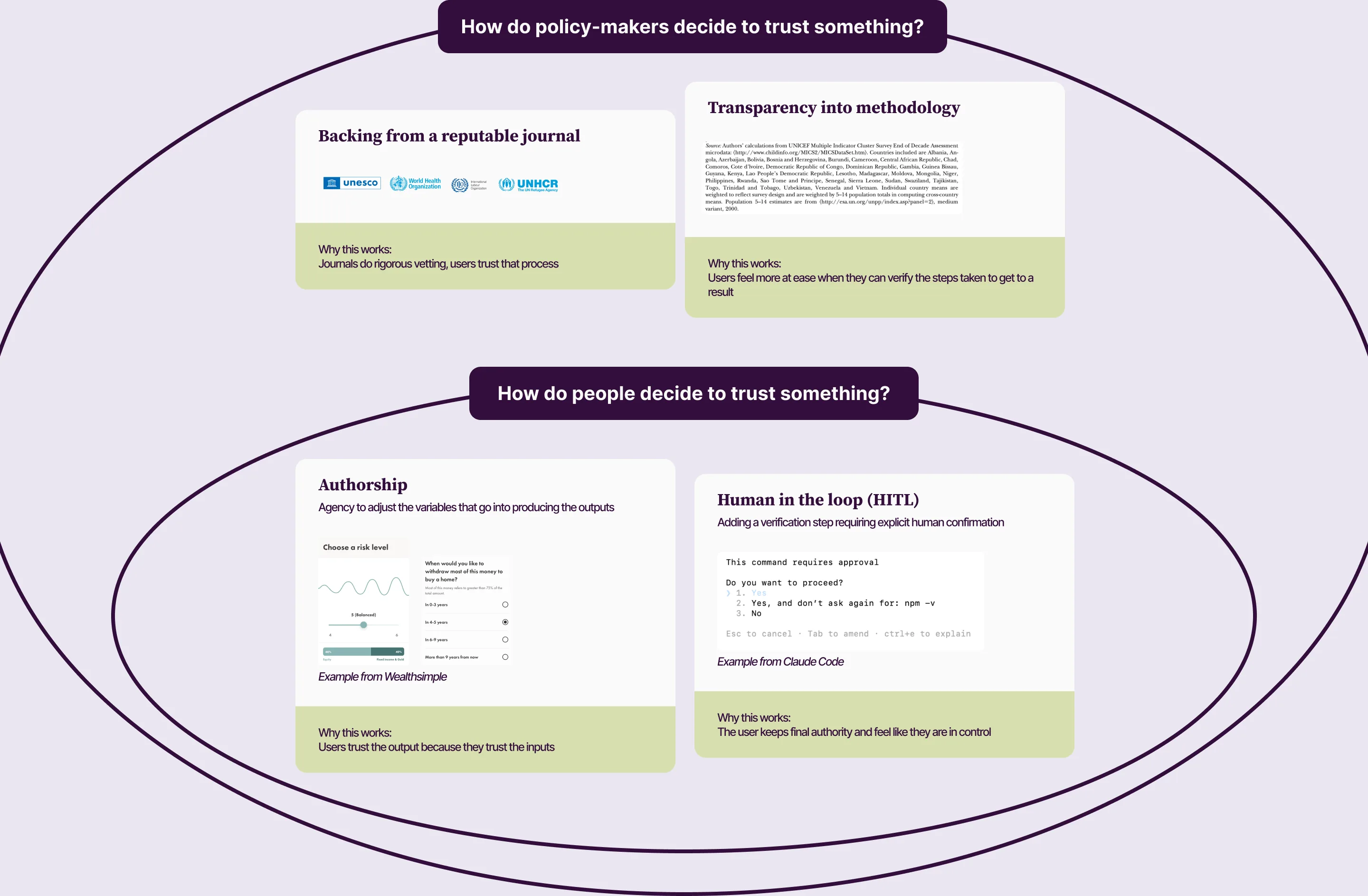
I realized our existing solutions had only considered gaining trust from only policy-makers but had not considered how to gain a person’s trust in general
The solution needed to include users in determining the inputs that went into the results and give them veto power
SOLUTION
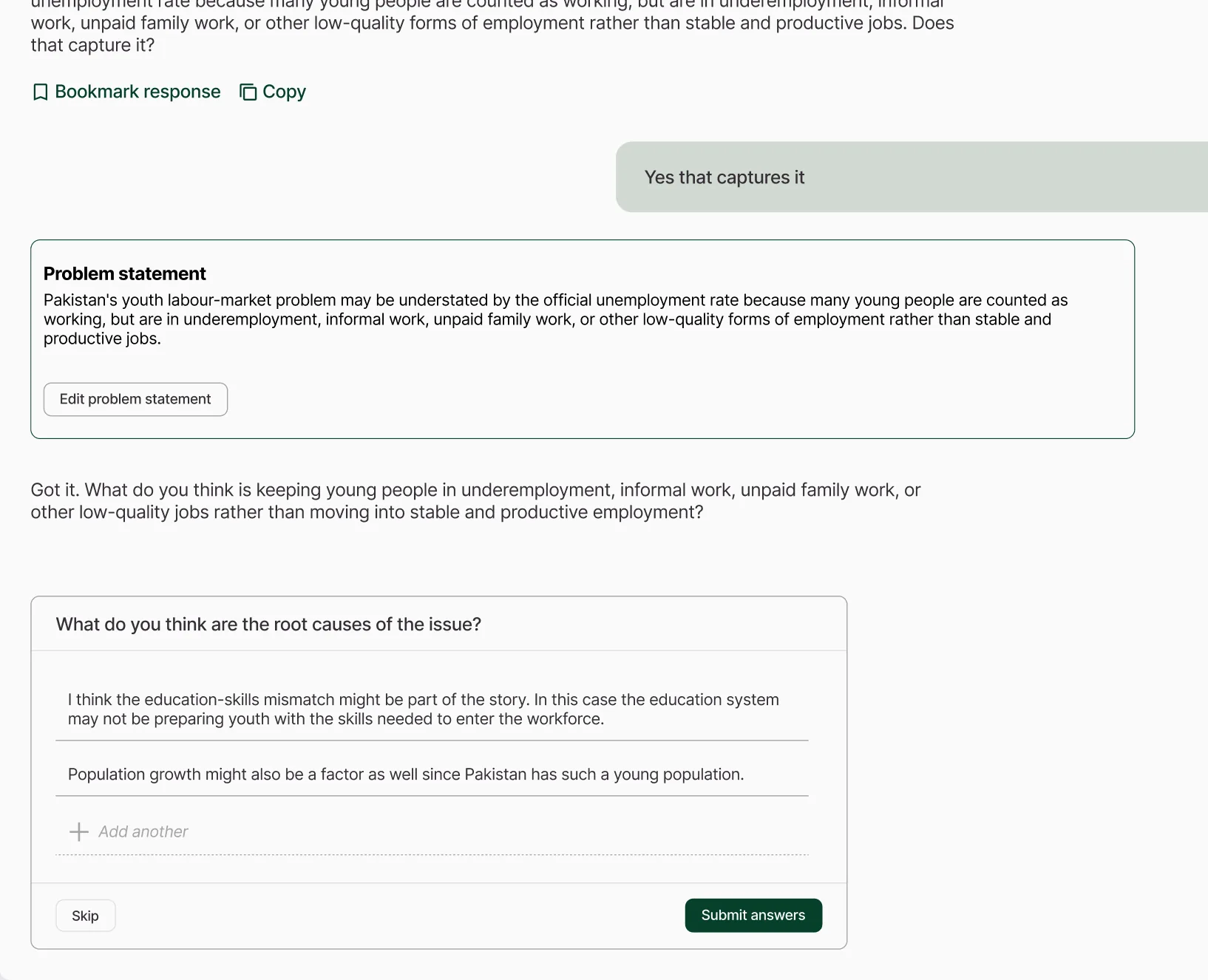
The redesign turns one question into a two-stage flow where users steer which evidence is selected
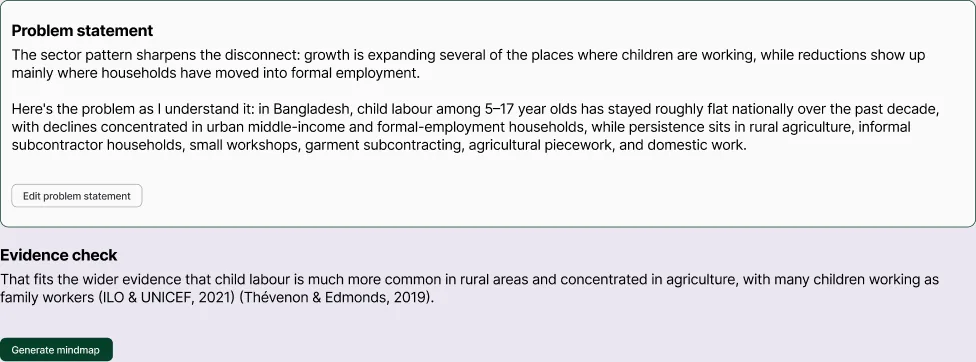
Stage 1: Defining the problem
The AI asks scoping questions and drafts a problem statement. The user confirms or corrects it, and only then does the evidence check run against it
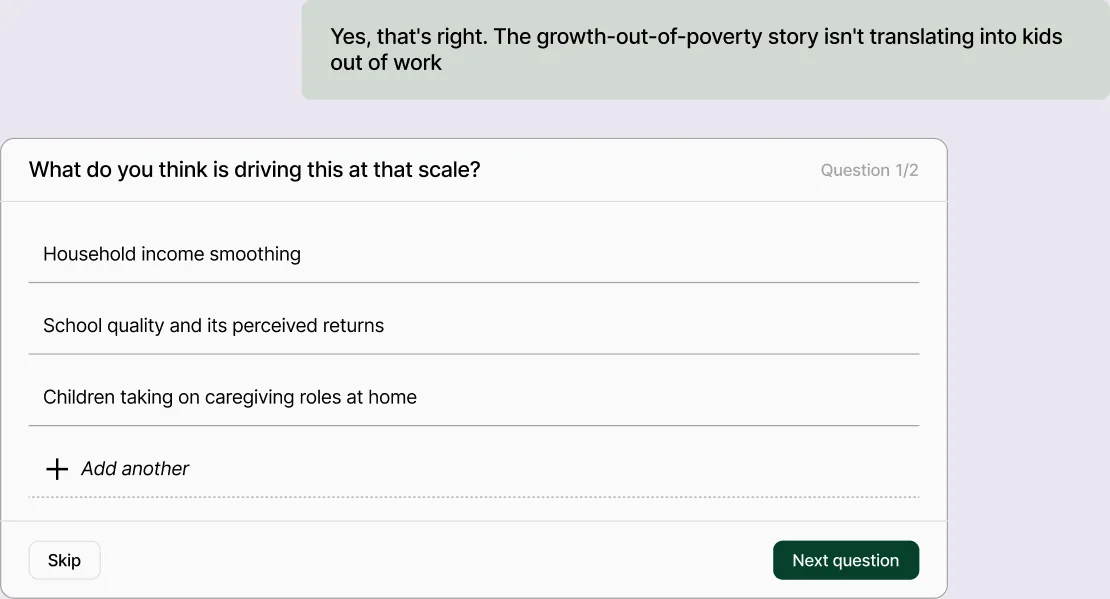
Stage 2: Diagnosing root causes
The user inputs their ideas on root causes or brings their own research and the system compares each against the evidence
Edge case:
Some users didn't have the context to answer key questions
I decided:
to build an escape hatch because forcing an answer risked losing users and letting them guess risked a misleading output
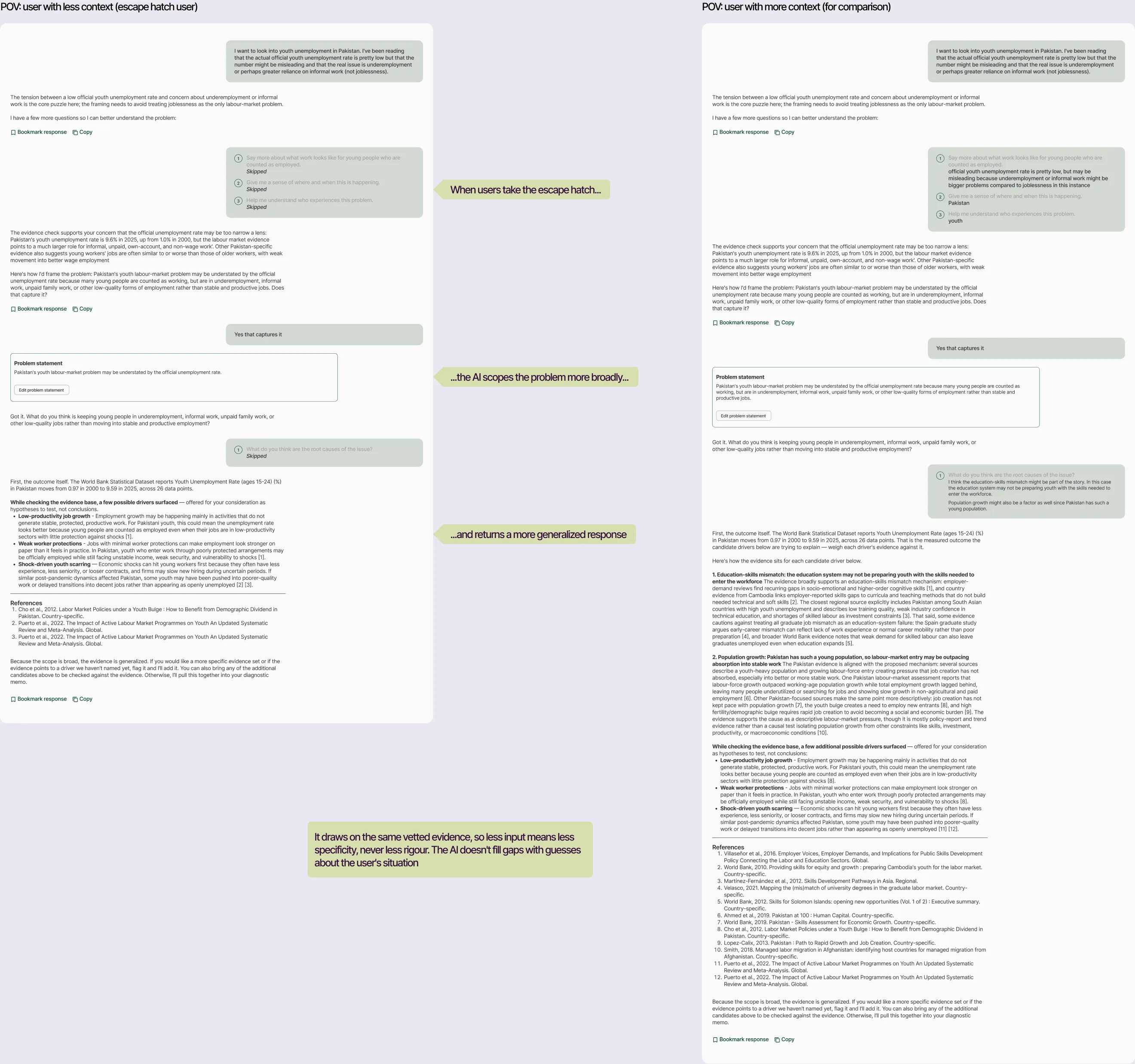
POV: user with less context (escape hatch user)
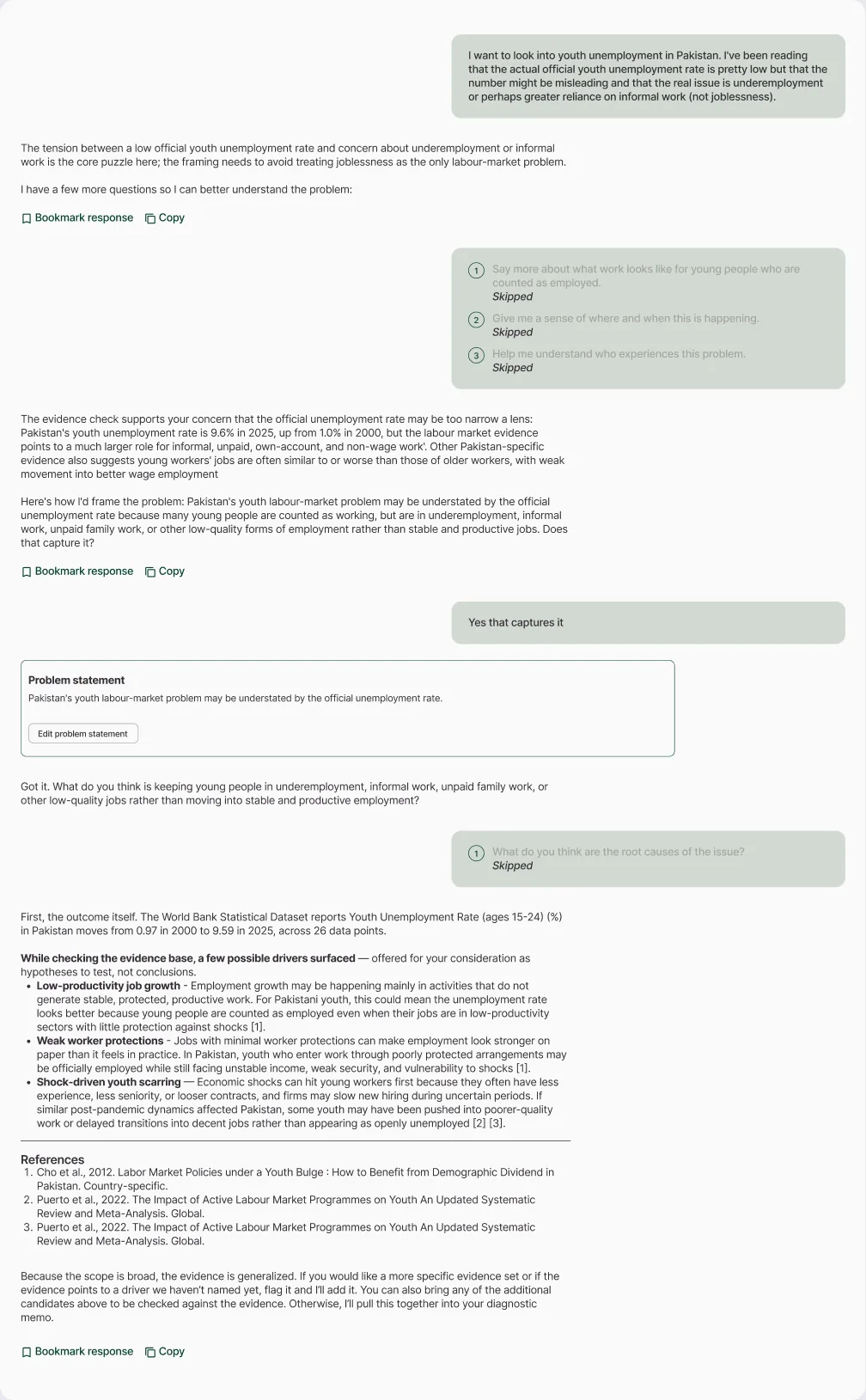
- When users take the escape hatch...
- ...the AI scopes the problem more broadly...
- ...and returns a more generalized response
It draws on the same vetted evidence, so less input means less specificity, never less rigour. The AI doesn't fill gaps with guesses about the user's situation
POV: user with more context (for comparison)
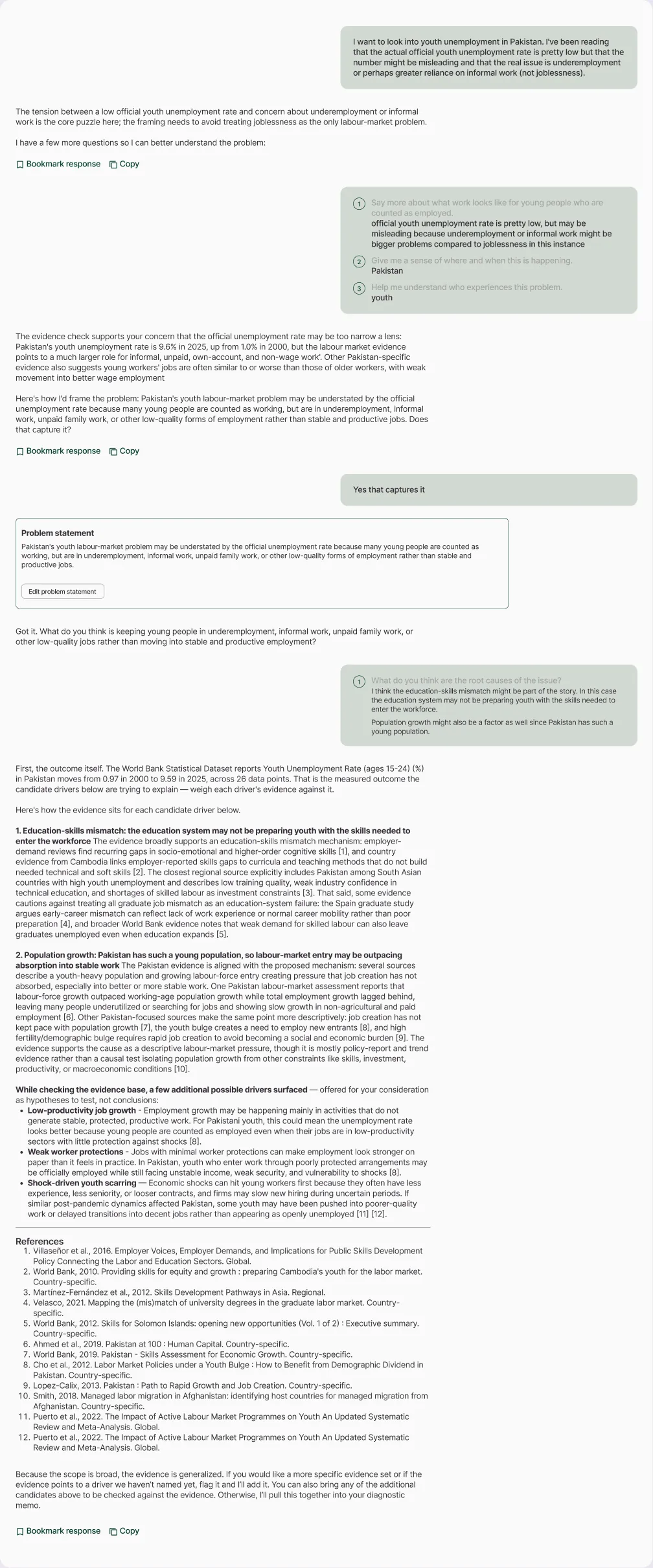
The new user experience helped secure a $1M funding round
Other stats
- 70% → 20%change in drop-off rate
- +22%longer sessions
- +66%sessions resulted in users using the AI’s evidence
(a proxy for trust)
Users’ preferences are a weak signal that need to be tested
Next time, I would dig deeper by not only hearing what users have to say but also observing what users are doing. Based on that, I would validate with quick prototypes first before implementing something.